
Flat Roofing & EPDM Roof Installation in Glasgow
Strathclyde Domestic Roofing installs and replaces flat roofing systems for homes across Glasgow and Central Scotland. From garages and extensions to porches and other domestic flat roofs, we provide durable, weather-resistant roofing solutions designed for long-term protection against the Scottish weather.
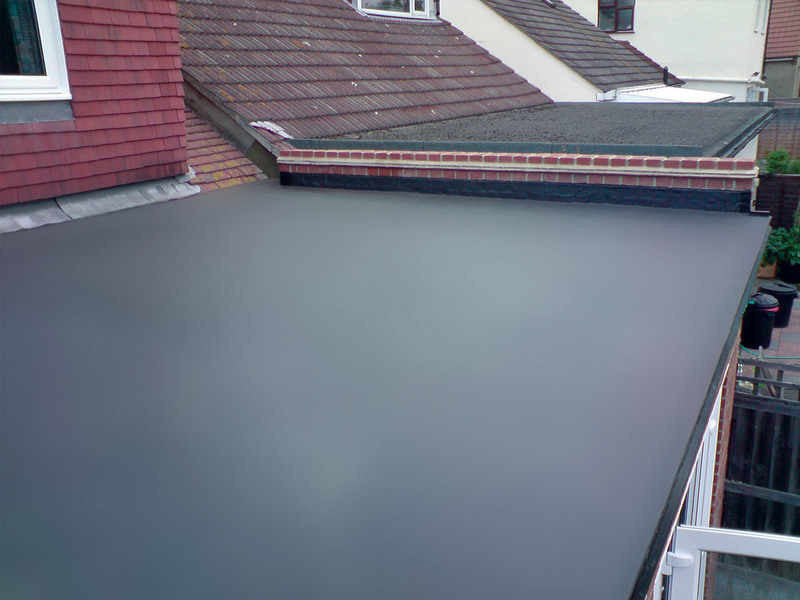
Professional Flat Roofing Services
Flat roofs need a roofing system specifically designed to provide reliable waterproof protection on roofs with little or no visible pitch.
Older flat roofs can eventually suffer from cracking, lifting, failed joints, deteriorated edges and repeated leaks. Once the waterproof covering begins to fail, moisture can penetrate beneath the surface and potentially damage the roof deck and structure below.
We install modern flat roofing systems with careful attention to the roof surface, drainage, edges, junctions and other areas where water penetration can occur.
What Is EPDM Rubber Roofing?
EPDM (Ethylene Propylene Diene Monomer) is a highly durable synthetic rubber membrane used to create a waterproof covering on flat and low-pitched roofs. In simple terms, it is a modern rubber roofing system that provides an alternative to traditional felt flat roofing.
EPDM can often be installed in large sheets, reducing the number of seams and joints across the main roof area. The flexible membrane is designed to cope with changing temperatures, rain and exposure to the weather while maintaining a waterproof barrier over the roof.
It is commonly used on extensions, garages, dormers, porches and other domestic flat roofs and can provide a clean, low-maintenance and long-lasting roofing solution when correctly installed.
Our Flat Roof Installation Process
Every new flat roof starts with an assessment of the existing property and roofing structure. This allows us to understand what is required, discuss the available options and plan the work properly before installation begins.
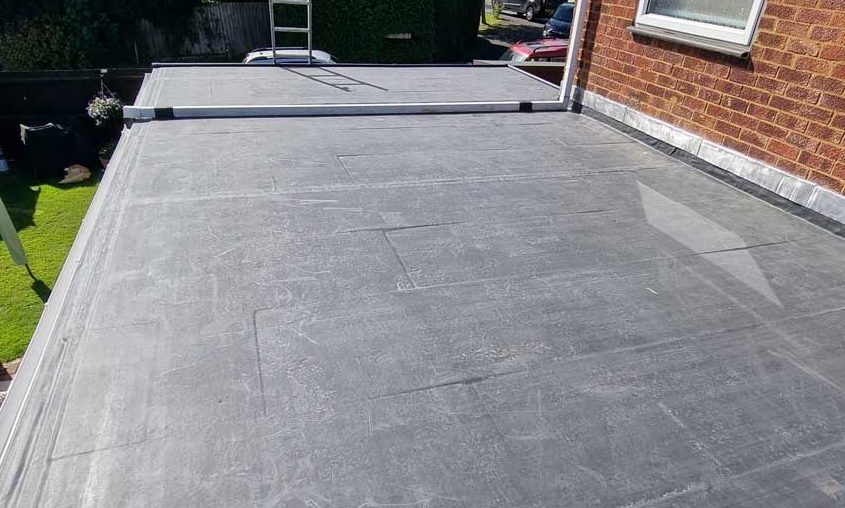
1. Flat Roof Assessment
We begin by inspecting the existing flat roof, including the condition of its covering, edges, drainage and any visible signs of water penetration.
This helps us establish whether the roof can be repaired or whether replacement is the more appropriate long-term solution.
2. Removing the Existing Roof Covering
Where replacement is required, the existing roofing material is removed as necessary so the condition of the roof beneath can be properly assessed.
This is important because simply covering a deteriorated roof can conceal problems rather than resolving them.
3. Inspecting and Preparing the Roof Deck
The supporting roof deck is checked for deterioration, moisture damage and areas that may need attention before the new roofing system is installed.
A sound and properly prepared surface is an important part of a successful flat roof installation.
4. Installing the EPDM Roofing System
The new EPDM membrane is installed and carefully finished around the roof perimeter, drainage points, walls and other junctions.
Particular attention is given to these details because they are among the areas most vulnerable to water penetration when a flat roof has been poorly installed.
5. Final Inspection
Once installation is complete, the roof is checked to ensure the membrane, edges, junctions and other important weatherproofing details are properly finished and secure.
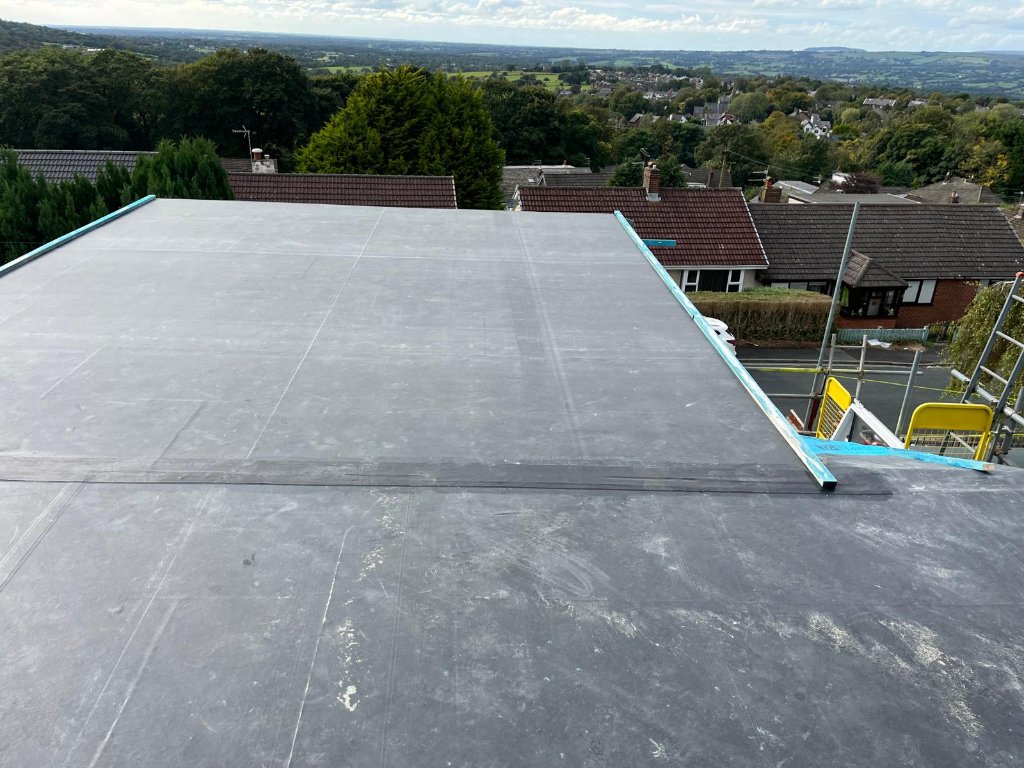
Why Choose EPDM for a Flat Roof?
One of the main advantages of EPDM is its ability to create a continuous waterproof membrane across large areas of a flat roof.
The material remains flexible rather than becoming rigid, allowing it to cope with temperature changes and normal movement within the roofing structure. It is also resistant to prolonged exposure to rain, sunlight and changing weather conditions.
For suitable domestic roofs, EPDM can provide a practical alternative to repeatedly repairing an ageing traditional flat-roof covering.
The suitability of any roofing system still depends on the individual property, so we assess the existing roof before recommending the appropriate solution.
Where Can EPDM Flat Roofing Be Used?
EPDM can be suitable for many domestic flat and low-pitched roofing applications.
Extensions
Modern EPDM roofing can provide a clean, waterproof finish for flat-roof home extensions.
Garages
Ageing garage roofs frequently develop leaks and deterioration. A replacement EPDM system can provide long-term protection for the structure below.
Dormer Roofs
Dormers often incorporate small flat or low-pitched roof areas where reliable weatherproofing is particularly important.
Porches and Entrance Roofs
Even relatively small flat roofs need appropriate drainage, edges and waterproof detailing.
Other Domestic Flat Roofs
We can inspect other flat and low-pitched areas of your property and advise whether an EPDM system is suitable.
Signs Your Flat Roof May Need Replacing
Flat-roof deterioration can develop gradually, and the first obvious sign may sometimes be water appearing inside the property.
Warning signs can include recurring leaks, cracks or splits in the roof covering, lifting or bubbling areas, deteriorated edges, internal water staining and previous repairs beginning to fail.
Areas of persistent standing water can also indicate that the condition or drainage of the roof should be investigated.
If repairs are becoming increasingly frequent, replacing an ageing roofing system may provide better long-term value than continuing to repair individual defects.
Flat Roof Repair or Replacement?
A leaking flat roof does not automatically need to be completely replaced.
Where the existing roofing system remains in reasonable condition and the problem is confined to a particular area, a professional repair may be sufficient.
Replacement becomes more appropriate where deterioration is widespread, the covering is approaching the end of its useful life or previous repairs are repeatedly failing.
We inspect the roof before recommending the appropriate option rather than assuming that every leak requires a complete replacement.
Why Flat Roof Drainage Matters
Despite the name, a flat roof should normally be constructed so that rainwater can move towards suitable drainage points rather than simply remaining on the roof.
Poor drainage can leave water sitting on the surface for prolonged periods and place additional demands on the roofing system.
The roof covering, drainage, falls, outlets and surrounding details therefore need to work together as a complete system.
When assessing a flat roof, we consider these factors alongside the condition of the waterproof covering itself.
Flat Roofing for the Scottish Weather
Flat roofs in Glasgow and Central Scotland are regularly exposed to heavy rain, strong winds, low temperatures and rapidly changing weather.
That makes reliable waterproofing particularly important.
A flat roofing system needs to protect not only the main roof surface but also its edges, junctions, drainage points and other vulnerable areas.
Correct preparation and installation are therefore just as important as the roofing membrane itself.
Why Choose Strathclyde Domestic Roofing?
Strathclyde Domestic Roofing provides professional domestic roofing services throughout Glasgow and Central Scotland.
We assess the condition of the existing roof before recommending work and provide straightforward advice on whether repair or replacement is appropriate.
Our flat roofing work focuses on the complete roofing system, including the roof surface, edges, drainage and weatherproofing details, rather than simply covering over existing problems.
Our reputation is backed by a 4.9/5 Google rating from around 100 customer reviews.
Flat Roofing Across Glasgow and Central Scotland
We install, replace and repair domestic flat roofs throughout Glasgow and the surrounding areas.
Whether you have a leaking garage roof, an ageing extension roof, a dormer requiring attention or another domestic flat-roof area, we can inspect its condition and recommend an appropriate roofing solutio
New Roofs for Traditional and Modern Properties
Every property is different, and the roofing system should suit the building rather than taking a one-size-fits-all approach. We install new roofs on a wide range of homes across Glasgow and Central Scotland, from traditional sandstone and period properties to modern detached, semi-detached and terraced homes.
Older properties may require particular attention to original roof details, slate, chimneys and the character of the building, while newer homes may use different tiled roofing systems and construction methods. We take the existing property into account when recommending materials and planning the installation, with the aim of creating a finished roof that looks right on the building as well as providing long-term weather protection.
New Roofs Designed for the Scottish Weather
Roofs in Scotland have to cope with heavy rain, strong winds, cold temperatures and rapidly changing weather throughout the year. A new roof therefore needs to be properly specified and installed for the conditions it will face, rather than simply looking good when the work is finished.
We pay close attention to the areas where roofing problems commonly develop, including ridges, valleys, roof edges, chimneys, junctions and other exposed details. Correct weatherproofing, ventilation and installation are all important parts of creating a roofing system capable of protecting your home over the long term.
Our 20-year guarantee on all new roofs reflects the confidence we place in the roofing systems we install and the standard of workmanship behind them.
Do You Need a New Flat Roof?
If your flat roof is leaking, deteriorating or requiring increasingly frequent repairs, Strathclyde Domestic Roofing can inspect the existing roof and explain the options available.
Whether the appropriate solution is a targeted repair or a complete new EPDM roofing system, we can provide a clear quotation based on the work actually required.
Frequently Asked Questions About New Roofs
What is EPDM roofing?
EPDM stands for Ethylene Propylene Diene Monomer. It is a synthetic rubber membrane used to waterproof flat and low-pitched roofs. It can often be installed in large sheets, helping to minimise the number of joints across the main roof surface.
How long does an EPDM flat roof last?
EPDM is designed as a long-term roofing material, but the lifespan of any flat roof depends on the product used, installation quality, roof construction, drainage, maintenance and exposure to the weather. Correct installation and detailing are particularly important to its long-term performance.
Can EPDM be installed over my existing flat roof?
It depends on the construction and condition of the existing roof. The surface beneath the new membrane needs to be suitable, and deterioration or moisture damage should be identified before installation. We assess the existing roof before determining the appropriate installation method.
Why does my flat roof keep leaking?
Recurring flat-roof leaks can be caused by an ageing covering, cracks or splits, failed joints, damaged edges, poor drainage or problems around walls, outlets and other roof junctions. The source of the water should be identified before deciding whether repair or replacement is required.
Is EPDM suitable for garages and extensions?
Yes. EPDM can be suitable for garage roofs, extensions, dormers, porches and many other domestic flat or low-pitched roofs. The individual roof should still be assessed to make sure the system is appropriate for its construction and condition.
How much does a new EPDM flat roof cost?
The cost depends on the size and complexity of the roof, accessibility, the condition of the existing covering and roof deck, and the preparation required before installation. A small garage roof will involve different work from a larger extension or a roof with underlying damage, so an inspection is needed before providing an accurate quotation.